
A Research-Based Methodology:
Concepts Behind the Design of the
Find Your Voice Autism Debate WorkshopTM
Incorporation of Visual Aids
Another research finding that inspired the use of props in this workshop is the effectiveness of visual aids in autism communication. A common method of aiding verbal communication in young children with autism involves using picture aids or props. Picture Exchange Communication System (known as “PECS”) is a well-known system of communication developed foruse with autistic children that has had significant success. Where the Find Your Voice Autism Debate WorkshopTM differs from some other adaptive communication techniques is that it uses visual props to re-orient the participant back to auditory and speech channels of communication, which is more aligned with communication habits in the neurotypical population. The goal is that the visual props will be learning cues whose use can be discontinued once the skills are acquired.
For a bibliography of research articles that informed and inspired the development of this workshop series, see “Bibliography” under the Resources tab.
Disclaimer:
These materials have been developed in conjunction with a review of clinical research on communication challenges faced by children and young adults with autism. However, it is important to note that the materials have been prepared with no formal license or training in education or working with the autism community. There can be no substitute for consulting with accredited professionals in these fields. The materials are inspired by a sense of collective responsibility and an interest in exploration of solutions, and are offered in the spirit of contribution to those who may find them of help.
The Find Your Voice Autism Debate WorkshopTM
Getting Started:
Introduction to Debate
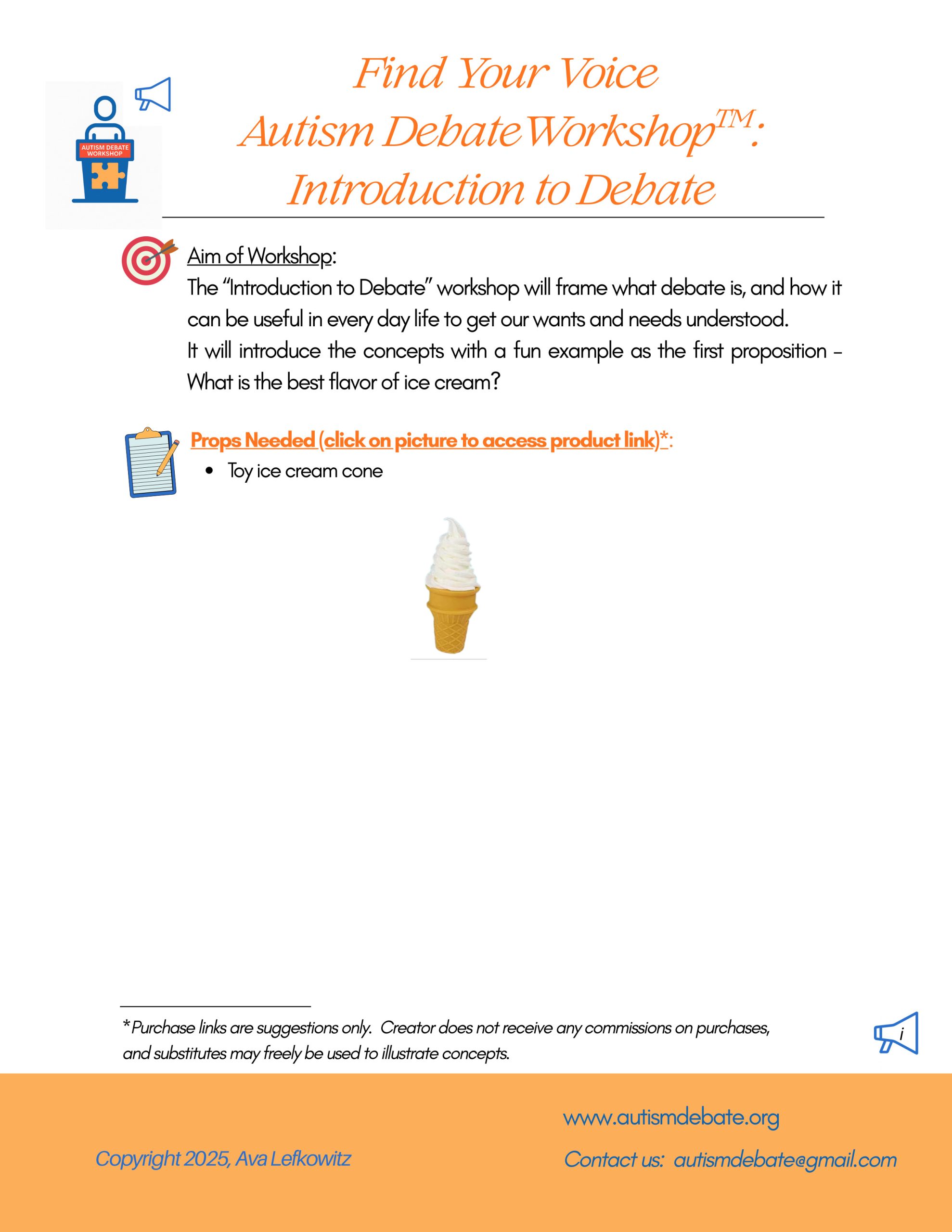
Workshop #1:
“Lights Out” Listening
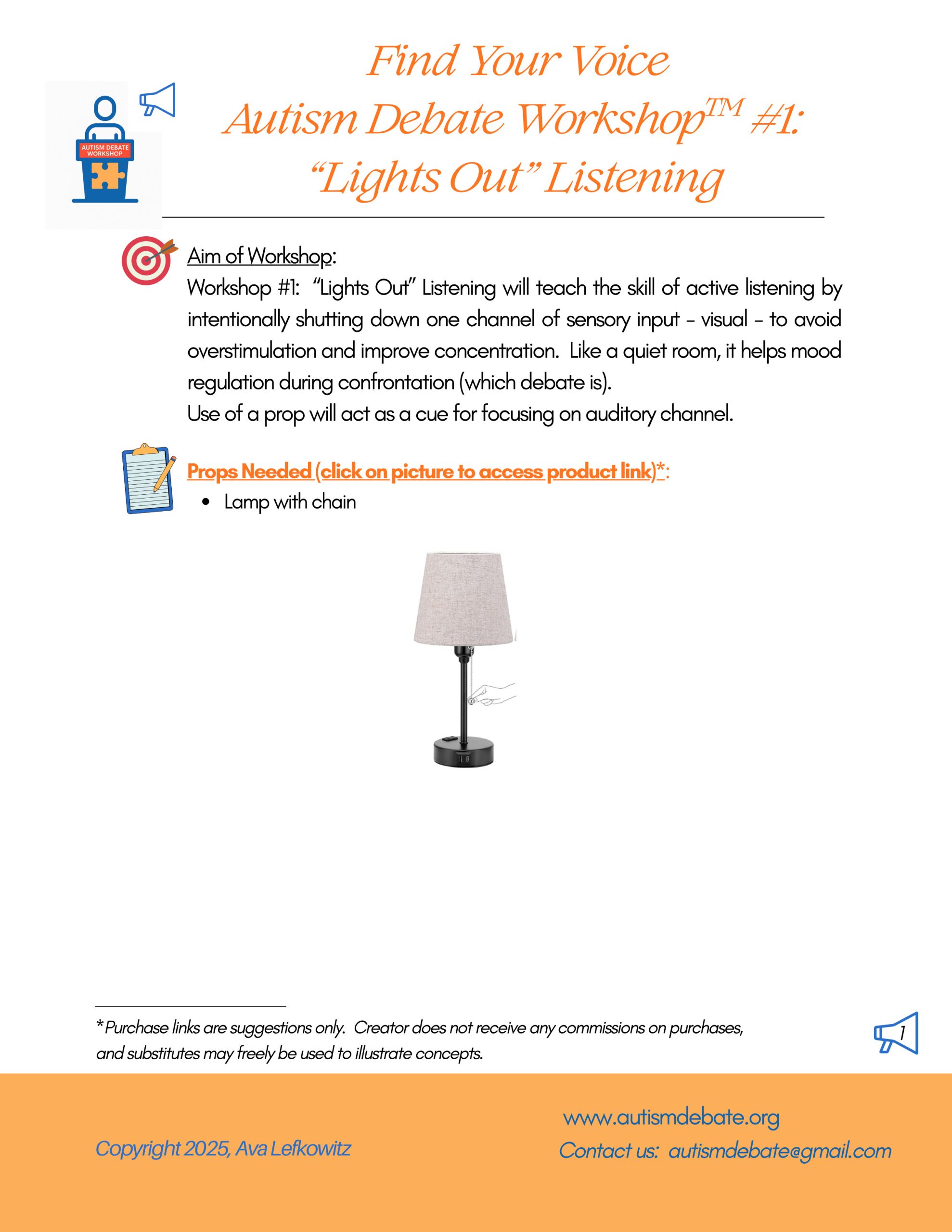
Workshop #2:
“Mirror” Technique
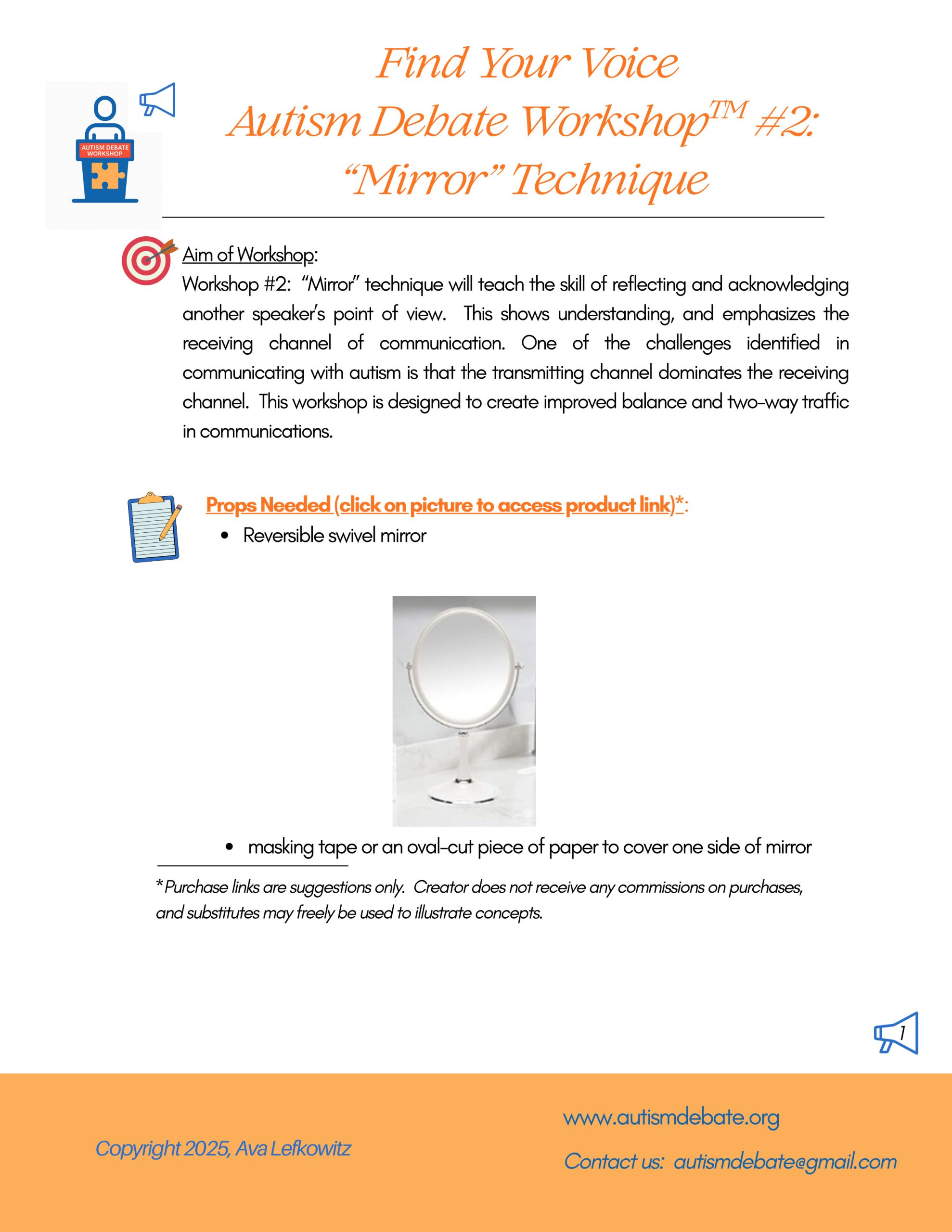
Workshop #3:
Building an Argument: The Three-Legged Stool
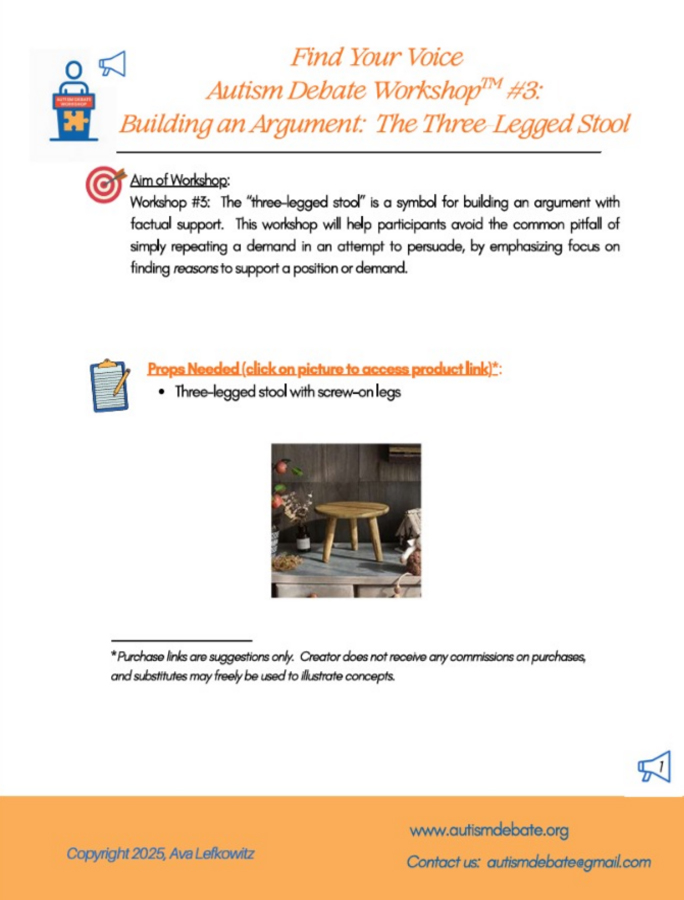
Workshop #4:
Rebuttal
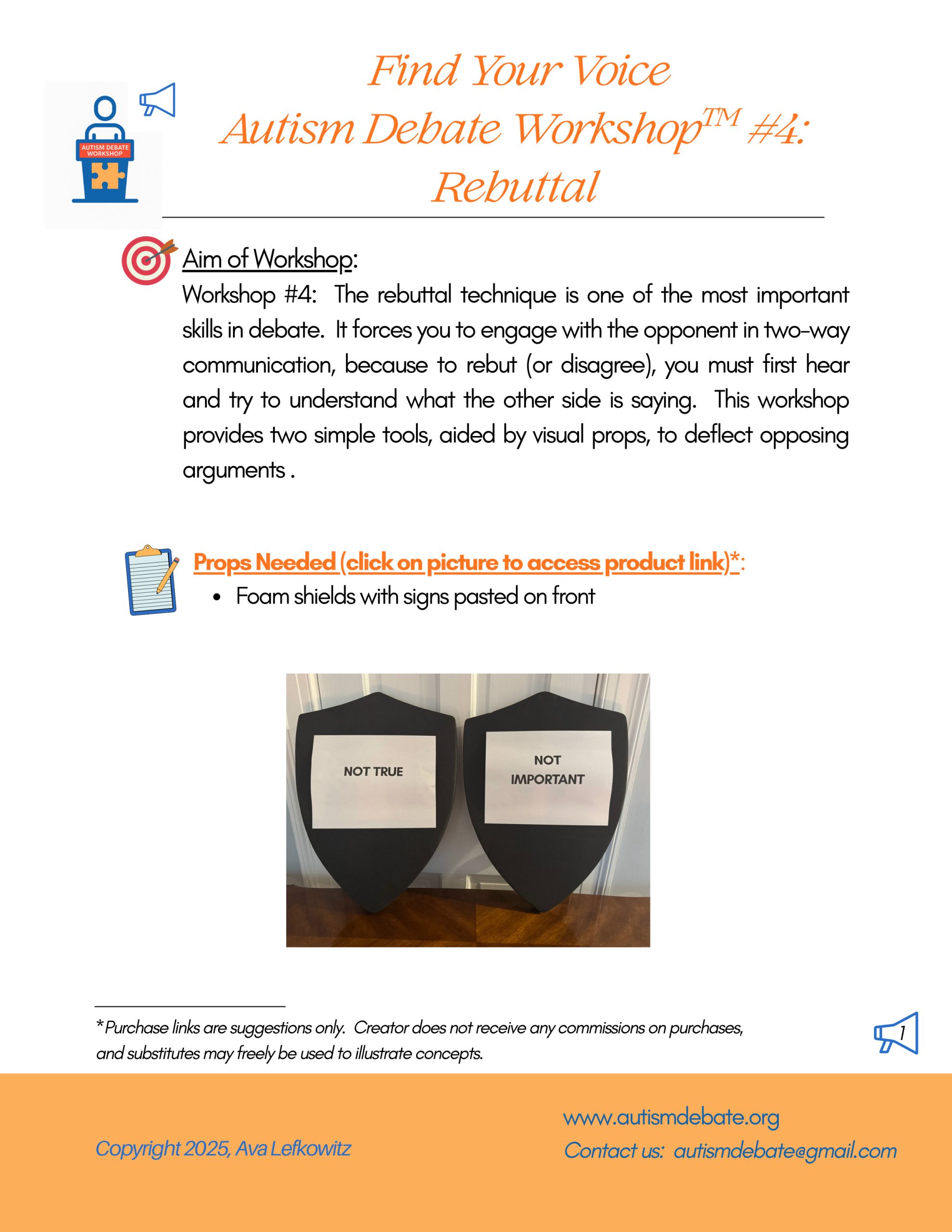
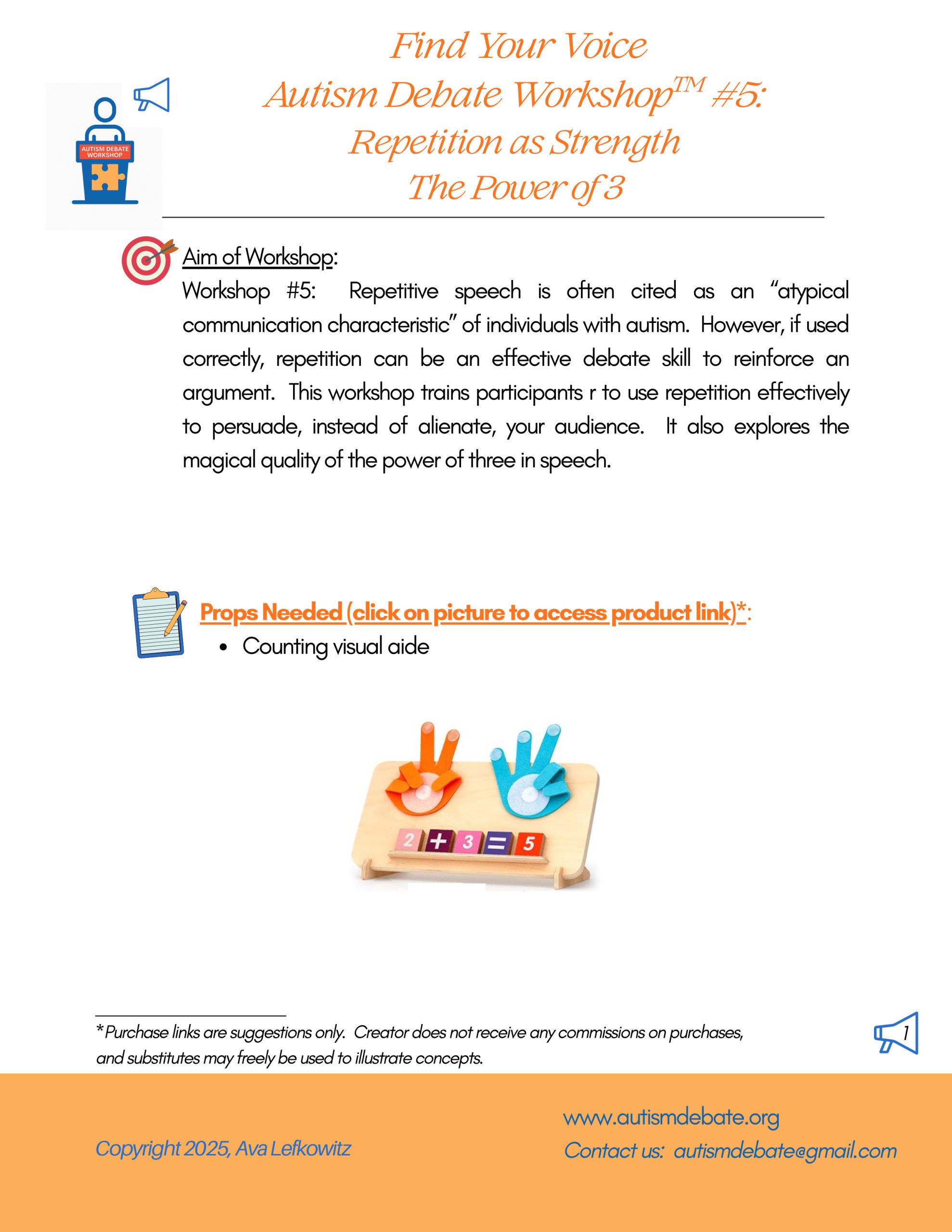
Workshop #5:
Repetition as Strength: The Power of Three
Conclusion:
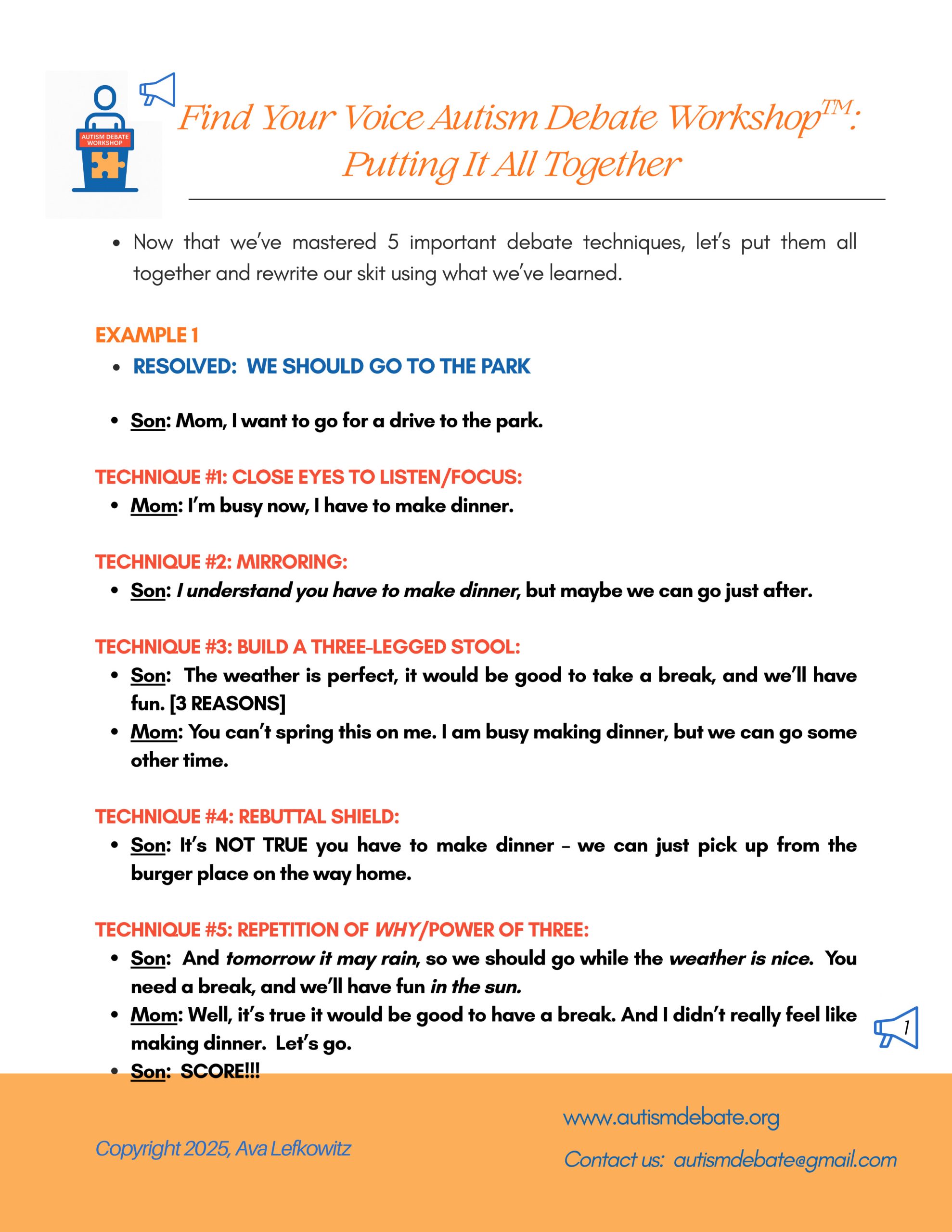
Putting It All Together
Disclaimer
These materials have been developed in conjunction with a review of clinical research on communication challenges faced by children and young adults with autism.
continuedResults that speak volumes.
Read success stories from our workshop users:
Patrick Bardsley, CEO
Spectrum Designs FoundationPort Washington, NY
Kylie Moore, Senior Coordinator of Special Projects & Communications
Bobby Dodd Institute, Atlanta, GATom Duffy, Workshop Participant
Spectrum Designs, Port Washington, NYMarissa Borzykowski, Chief of Staff
Spectrum Designs FoundationPort Washington, NY
Rick Sebastian, President & CEO
The Kennedy Collective, Trumbull, CTDylan Valic, Head of Marketing
Spectrum Designs FoundationPort Washington, NY