Autism Behavioral and Communication Research Articles
*The following is a non-exclusive list of recent research in autism behavior and communication.
Communication Research:Adolescents and Adults
The role of social drivers of health in communication abilities of autistic adolescents and young adults
Autism (2025)
https://journals.sagepub.com/doi/10.1177/13363613251380448
Examines how unmet service needs, barriers to services, and sense of community affect communication impairment in autistic individuals ages 13-30
Real world evidence for altered communication patterns in individuals with autism spectrum disorder
npj Digital Medicine (2025)
https://www.nature.com/articles/s41746-025-01545-x
Examines communication patterns in autistic individuals using digital biomarkers and smartphone technologies
Communication in Autistic Adults: An Action-Focused Review
PMC (2024)
https://pmc.ncbi.nlm.nih.gov/articles/PMC12271282/
Reviews recent research on communication patterns in autistic adults, including literal/non-literal language, augmentative communication, nonverbal communication, and double empathy
Improving Social Communication in Autistic Adolescents Through a Clinic-Home-School Collaboration
Journal of Autism and Developmental Disorders (October 2024)
https://link.springer.com/article/10.1007/s10803-024-06545-6
Evaluates an individualized social communication intervention for highly verbal autistic adolescents with parent participation and school coordination
Using Artificial Intelligence to Improve Empathetic Statements in Autistic Adolescents and Adults: A Randomized Clinical Trial
Journal of Autism and Developmental Disorders (February 2025)
https://link.springer.com/article/10.1007/s10803-025-06734-x
Tests an AI program using Large Language Models to improve verbal empathetic responses during social conversation in autistic adolescents and adults ages 11-35
Comparing and contrasting barriers in augmentative alternative communication use in nonspeaking autism and complex communication needs
Frontiers in Psychiatry (June 2024)
https://www.frontiersin.org/journals/psychiatry/articles/10.3389/fpsyt.2024.1385947/full
Explores barriers to AAC device use among minimally verbal autistic individuals, highlighting high abandonment rates
Augmentative and alternative communication in autism spectrum disorder: transitioning from letter board to iPad – a case study
Frontiers in Psychiatry (May 2024)
https://www.frontiersin.org/journals/psychiatry/articles/10.3389/fpsyt.2024.1345447/full
Documents significant communication improvements in a non-verbal adolescent using AAC tools
Systematic review of AAC intervention research for adolescents and adults with autism spectrum disorder
Augmentative and Alternative Communication (2017)
https://pubmed.ncbi.nlm.nih.gov/28884601/
Consolidates AAC intervention research specifically for adolescents and adults, finding benefits but identifying need for more research
Respect the way I need to communicate with you: Healthcare experiences of adults on the autism spectrum
Autism (2015)
https://pubmed.ncbi.nlm.nih.gov/25882392/
Community-based participatory research examining healthcare communication experiences of autistic adults
Behavioral Interventions & Social Training
The effectiveness of social training in individuals with autism spectrum disorder: a systematic review and transfer analysis
Scientific Reports (December 2024)
https://www.nature.com/articles/s41598-024-83953-9
Reviews social training interventions and their transferability, finding that cognitive interventions showed superior results compared to behavioral interventions
A Meta-Analysis of Applied Behavior Analysis-Based Interventions to Improve Communication, Adaptive, and Cognitive Skills
Review Journal of Autism and Developmental Disorders (May 2025)
https://link.springer.com/article/10.1007/s40489-025-00506-0
Meta-analysis finding large effect sizes for receptive language skills and moderate effects for adaptive and cognitive skills with ABA interventions
Identity, Perspectives & Experiences
The experience of autism from the perspective of autistic adolescents
Disability & Society (July 2024)
https://www.tandfonline.com/doi/full/10.1080/09687599.2024.2374484
Explores autistic adolescents’ own perspectives, finding they emphasize difference and diversity over difficulty and highlight strengths while acknowledging challenges with anger, stress, and feelings of disconnection
Social media shaping autism perception and identity
Autism (2024)
https://journals.sagepub.com/doi/10.1177/13623613241230454
Explores how Norwegian autistic adults ages 18-49 use social media to find information about autism and connect with online communities, revealing tensions between unreliable information and necessary identity development
Empathy among autistic and non-autistic adolescents: The importance of informant effects
Autism Research (August 2024)
https://pubmed.ncbi.nlm.nih.gov/39016632/
Studies empathy in adolescents ages 10-16, finding gaps between self and parent reports were explained by communication difficulties, challenging traditional views of autistic people having less empathy
Social Media Use and Autism – Teens and Adults
Autism Research Institute (2024)
https://autism.org/social-media-use-and-autism-teens-and-adults/
Research on online and social media experiences of autistic teens and young adults, examining both benefits like social connections and risks requiring evidence-based safety precautions
Employment & Workplace Communication
The Lived Experience of Autistic Adults in Employment
Systematic Review (2024)
https://worktogethernc.com/wp-content/uploads/thorpe-et-al-2024-the-lived-experience-of-autistic-adults-in-employment-a-systematic-search-and-synthesis-1.pdf
Synthesizes research on autistic workers’ employment experiences, highlighting workplace communication challenges and the disabling nature of neurotypical work environments
Autism and Employment Challenges: The Double Empathy Problem
PMC (June 2024)
https://pmc.ncbi.nlm.nih.gov/articles/PMC11317796/
Compares Theory of Mind versus Double Empathy explanations for autistic social functioning challenges in non-autistic workplaces, finding mutual misunderstandings rather than autistic impairments
Inclusive Communication Model Supporting the Employment Cycle of Individuals with Autism
PMC (2021)
https://pmc.ncbi.nlm.nih.gov/articles/PMC8125785/
Proposes tailored communication strategies around recruitment, selection, onboarding, and job retention to address communication deficits that cause stress for autistic adults
Autism and neurodiversity in the workplace: A scoping review
Journal of Vocational Rehabilitation (2024)
https://worksupport.com/research/documents/pdf/jvr_2024_601_jvr601jvr230060_jvr60jvr230060.pdf
Synthesizes research on autism employment from employer perspectives, examining attitudes, frameworks, interventions, and workplace environmental factors
Mental Health
Anxiety and depression in adults with autism spectrum disorder: a systematic review and meta-analysis
Psychological Medicine (2019)
https://pubmed.ncbi.nlm.nih.gov/30178724/
Comprehensive meta-analysis finding autistic adults are at disproportionate risk for anxiety and depression, which are the most prominent mental health comorbidities
The impact of depressive and anxious symptoms on quality of life in adults on the autism spectrum
Autism Research (June 2024)
https://pubmed.ncbi.nlm.nih.gov/38783834/
Studies German autistic adults ages 18-70, confirming lower quality of life and examining how depression and anxiety symptoms reduce quality of life
Longitudinal Associations Between Autistic Traits, Self-compassion, Anxiety and Depression
Journal of Autism and Developmental Disorders (December 2024)
https://pubmed.ncbi.nlm.nih.gov/37874475/
Longitudinal study finding self-compassion mediates relationships between autistic traits and mental health, suggesting it could be a therapeutic target
Experiences of Autism Acceptance and Mental Health in Autistic Adults
Journal of Autism and Developmental Disorders (2017)
https://link.springer.com/article/10.1007/s10803-017-3342-7
Examines how autism acceptance from others and personal acceptance significantly predict depression and stress in autistic adults, highlighting the importance of acceptance for mental health
Psychosocial Treatments Targeting Anxiety and Depression in Adolescents and Adults
Current Psychiatry Reports (2018)
https://pmc.ncbi.nlm.nih.gov/articles/PMC6421847/
Reviews psychosocial interventions for anxiety and depression in autistic adolescents and adults, finding considerable evidence for cognitive-behavioral therapy efficacy
Mental health in autistic adults: A rapid review
PMC (2023)
https://pmc.ncbi.nlm.nih.gov/articles/PMC10343158/
Identifies prevalence of ADHD, depression, and anxiety as most common psychiatric diagnoses in autistic adults, with rates varying widely based on diagnosis methods
Research Summaries & Annual Reviews
2025 Autism Research Year in Review
Autism Science Foundation
https://autismsciencefoundation.org/2025-year-in-review/
Reports progress in understanding severe behaviors, catatonia prevalence, and autism subtypes using AI-based pattern identification
2024 Autism Science Review
Autism Science Foundation
https://autismsciencefoundation.org/year-end-summary-2024/
Annual review covering late-diagnosed adults, profound autism in adults, and growing recognition of autism in females, noting late-diagnosed individuals often exhibit different autism phenotypes
A massive scientific review put alternative autism therapies to the test
ScienceDaily (University of Southampton, December 2024)
https://www.sciencedaily.com/releases/2025/12/251227082722.htm
Reviews complementary and alternative treatments, finding limited evidence for many popular approaches
ARI-Funded Research Studies 2024
Autism Research Institute
https://autism.org/ari-funded-research-studies-2024/
Overview of current research on genetics, neurology, sensory processing, and communication
*Last updated January 2026
The Find Your Voice Autism Debate WorkshopTM
Getting Started:
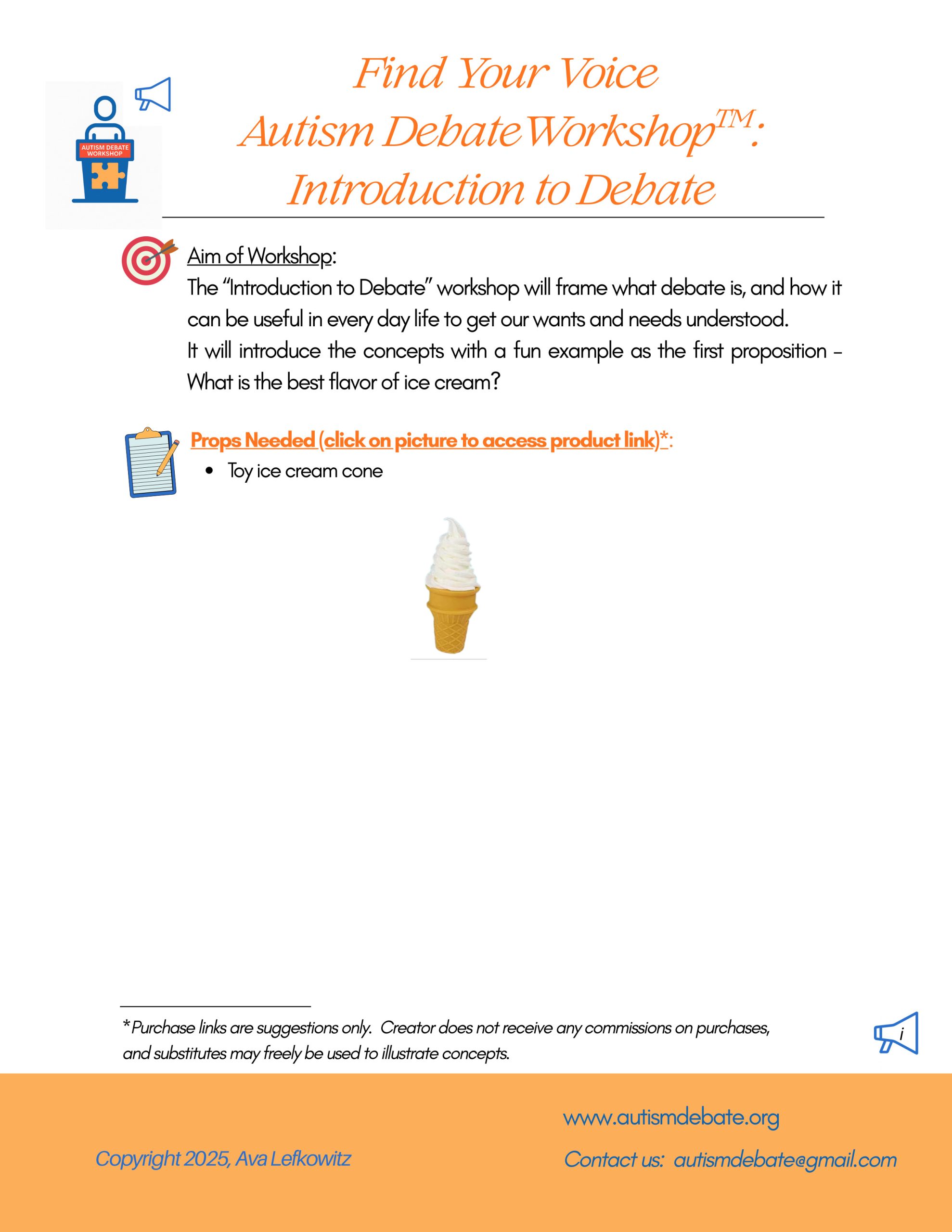
Introduction to Debate
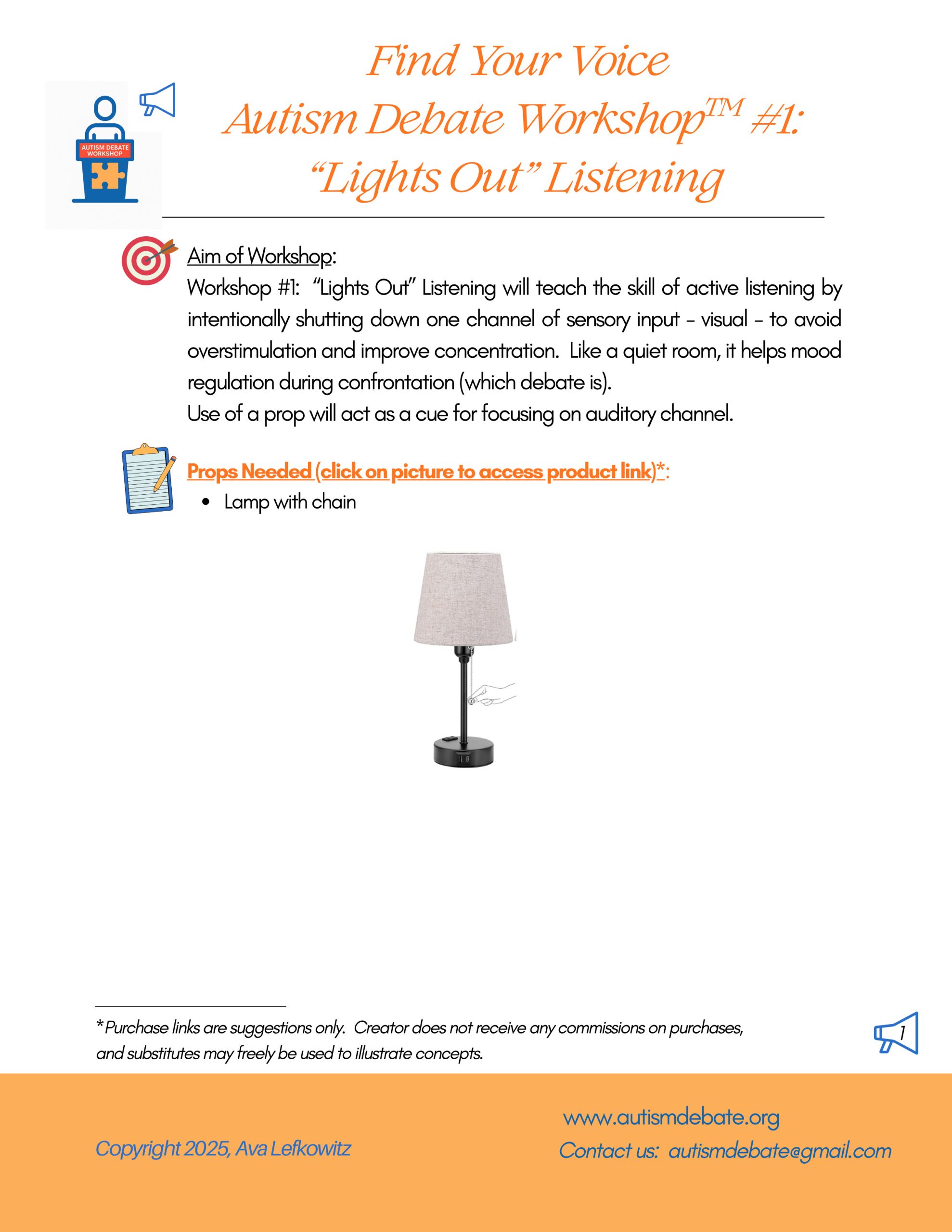
Workshop #1:
“Lights Out” Listening
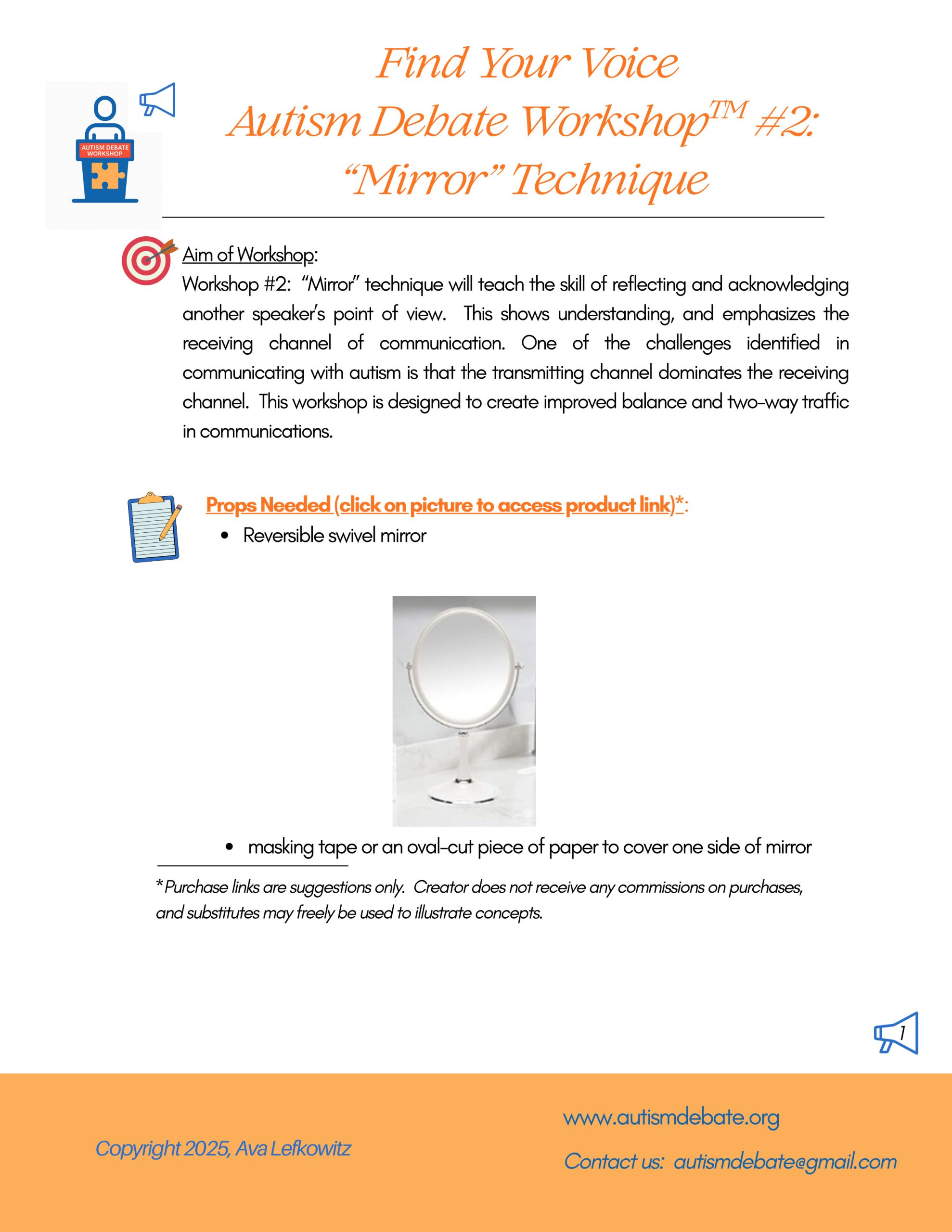
Workshop #2:
“Mirror” Technique
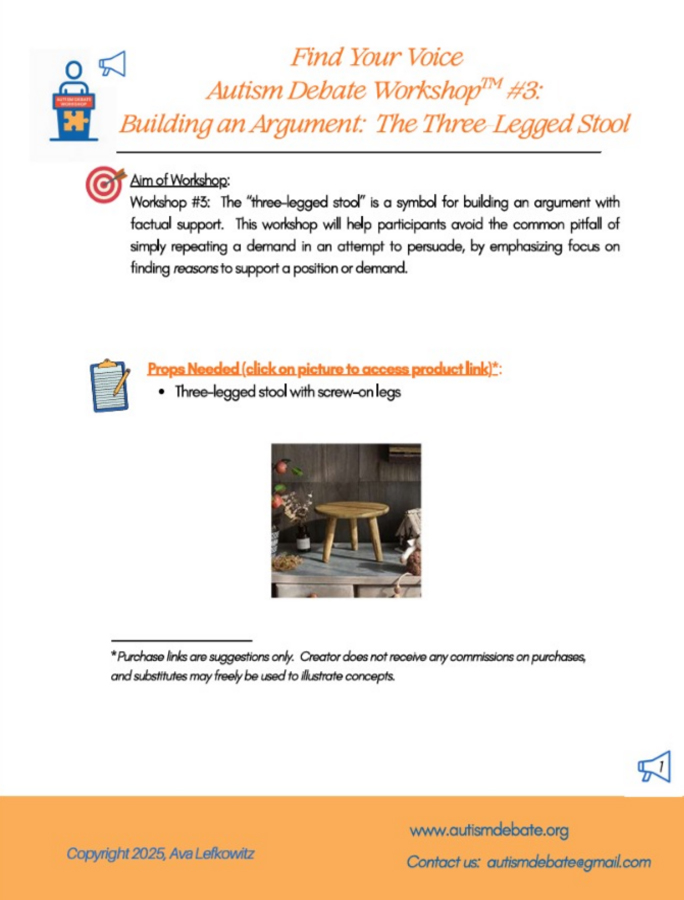
Workshop #3:
Building an Argument: The Three-Legged Stool
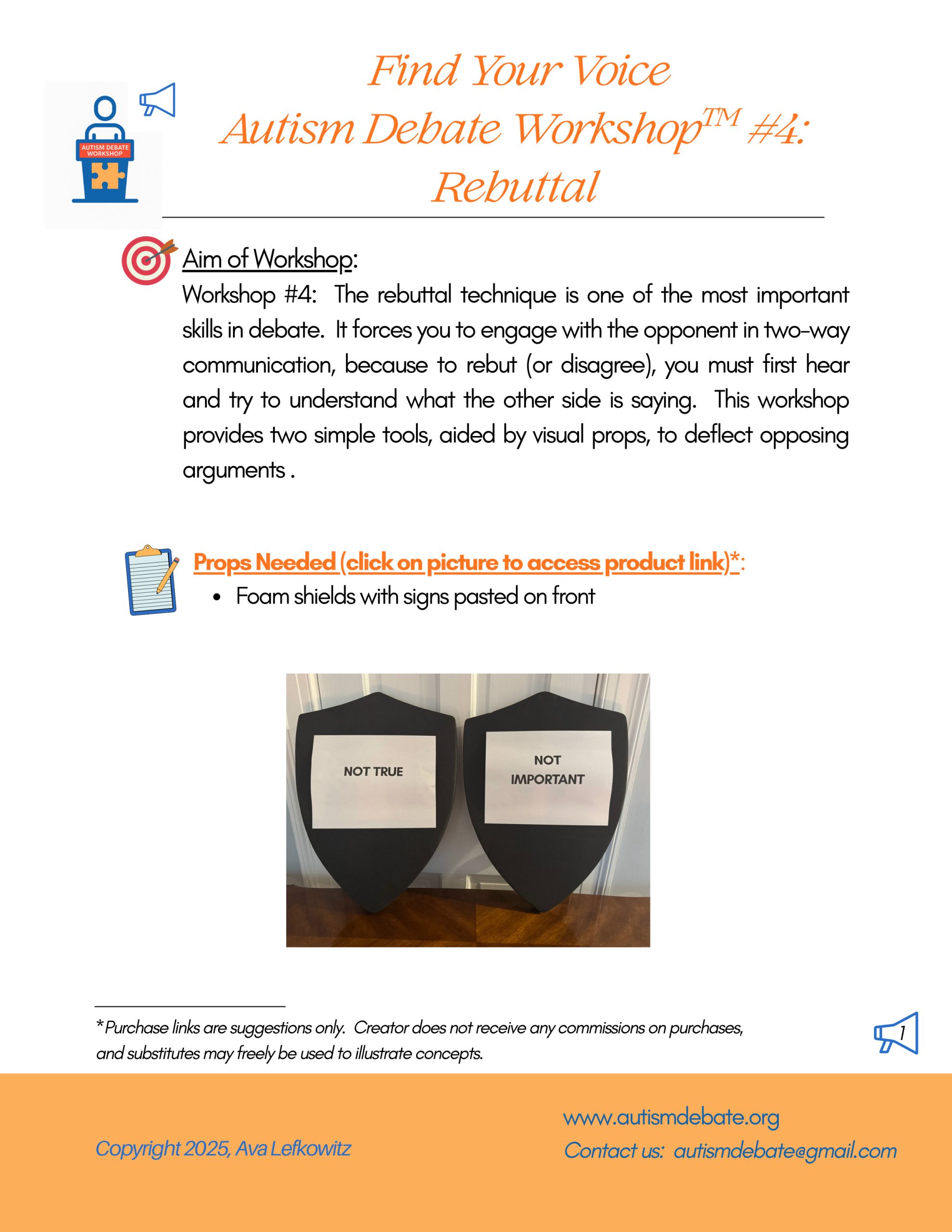
Workshop #4:
Rebuttal
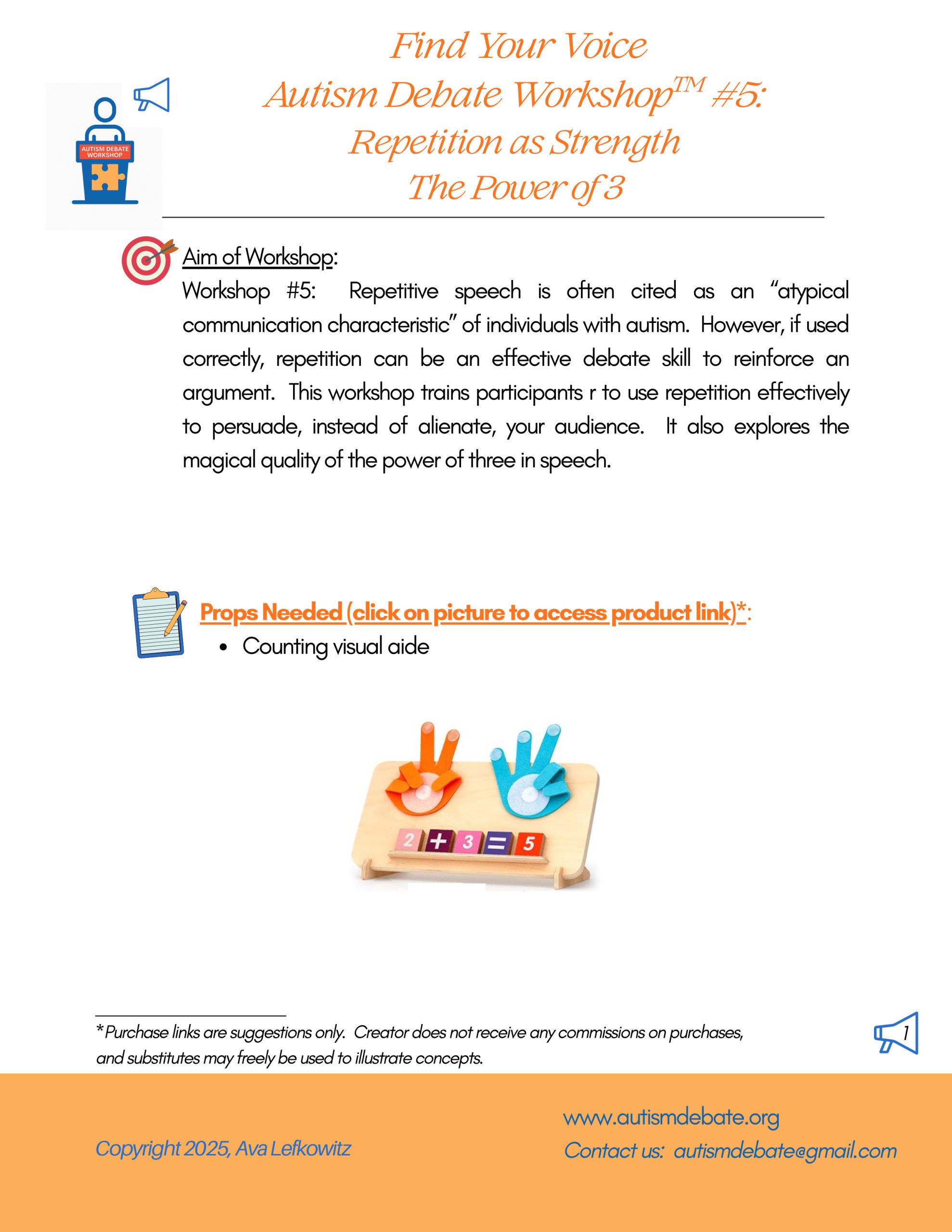
Workshop #5:
Repetition as Strength: The Power of Three
Conclusion:
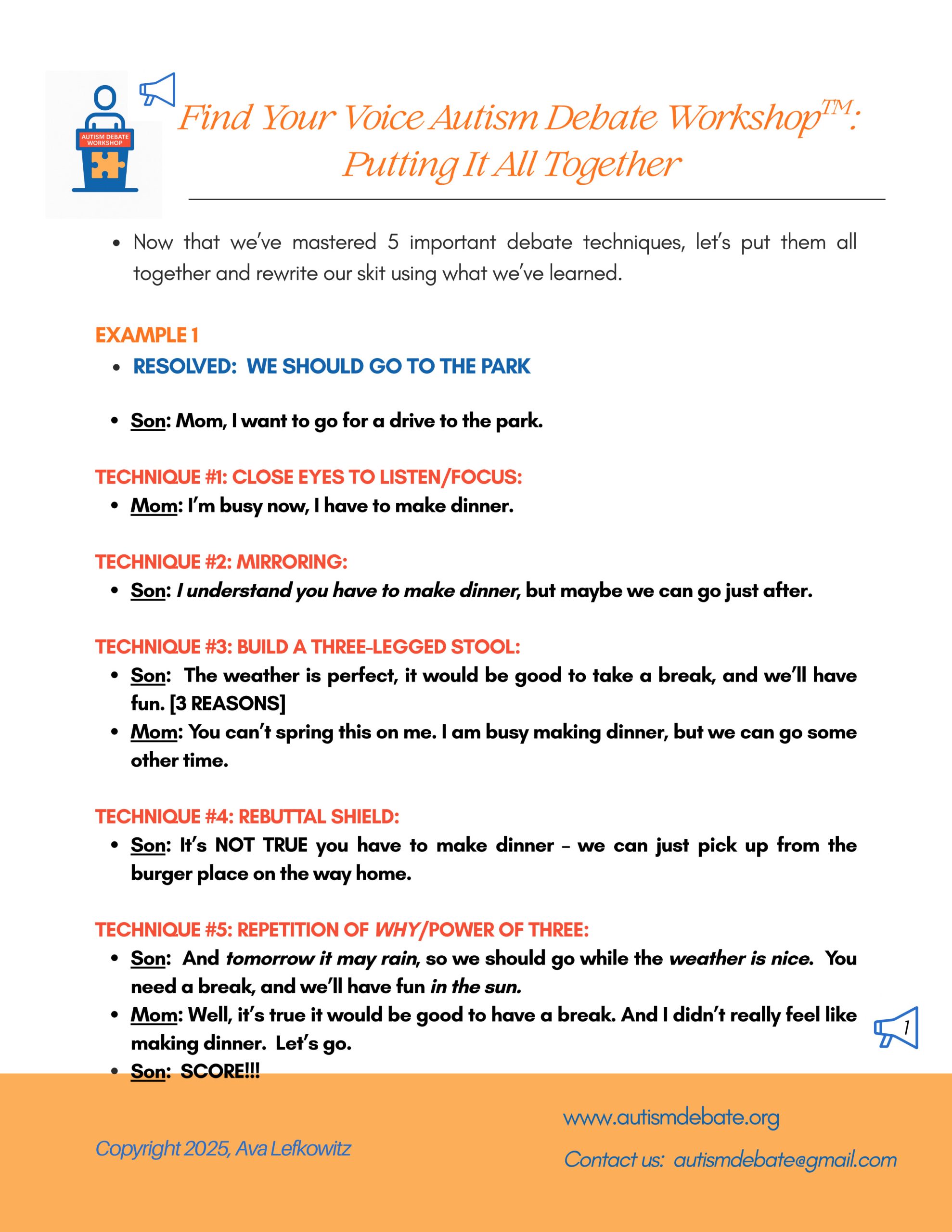
Putting It All Together
Disclaimer
These materials have been developed in conjunction with a review of clinical research on communication challenges faced by children and young adults with autism.
continuedResults that speak volumes.
Read success stories from our workshop users:
Patrick Bardsley, CEO
Spectrum Designs FoundationPort Washington, NY
Kylie Moore, Senior Coordinator of Special Projects & Communications
Bobby Dodd Institute, Atlanta, GATom Duffy, Workshop Participant
Spectrum Designs, Port Washington, NYMarissa Borzykowski, Chief of Staff
Spectrum Designs FoundationPort Washington, NY
Rick Sebastian, President & CEO
The Kennedy Collective, Trumbull, CTDylan Valic, Head of Marketing
Spectrum Designs FoundationPort Washington, NY